
Becoming a Community
In Conversation with Ricardo Dutra Gonçalves.
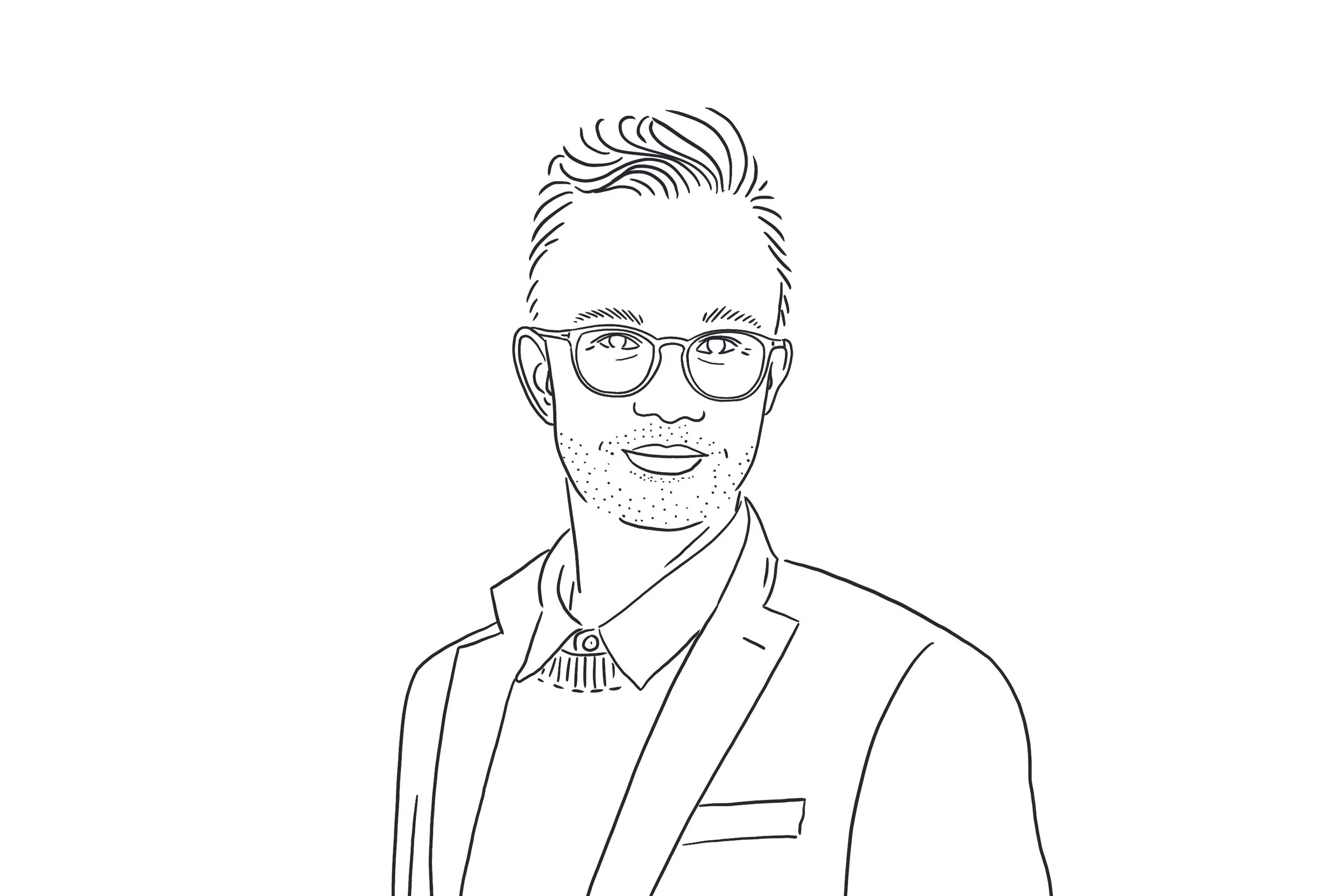
Ricardo is a social designer, researcher, and educator working and collaborating in diverse global contexts, with architects, change makers, choreographers, educators, artists, and social and business entrepreneurs. Committed to fostering personal and societal growth, Ricardo brings design, social art, and embodied awareness to transformative education, the future of work, organisational design, systems change, and relational well-being. Ricardo holds an MFA inTransdisciplinary Design from Parsons School of Design, New York, and a PhD in Design for Education from Monash University, Melbourne. He is currently a University Lecturer in the Department of Art & Media at Aalto University in Finland. Ricardo is also the founder of Make Aware Lab, a social design studio, and Studio Atelierista, a social arts residency program towards cultivating awareness-based collective creativity in response to pressing social and environmental transitions.
How Does a Group Become a Community?
In my work, I’ve come to see that the transformation of a group into a community begins not with structure or strategy, but with awareness—specifically, the awareness that the group already is a community in some form. Often, we default to separation, caught in the habit of feeling alone. But nothing exists in isolation. We are, inherently, in relationship—with each other, with place, with time.
This way, awareness is the seed: of self, of others, of the interconnected web we inhabit. It begins as embodied self-awareness—a tuning into thoughts, feelings, sensations—and expands outward into recognition of others. From there, a group may begin to sense itself as something more: a collective body, a “social body,” with its own rhythms and identity.
This shift cannot be commanded. It isn’t intellectual—it’s experiential. Recently, I facilitated a session using photographs of everyday groups: commuters on a metro, workers in a factory, fishermen pulling nets. From the outside, we can perceive the connections. But it’s only when participants feel these “social bodies” from within that true awareness begins to take root.
How do community dynamics (diversity, hierarchy) crystallise and evolve over time?
Out of this awareness comes intention. Out of intention, collective action. And in action, awareness deepens. A loop forms—mutual, generative—gradually strengthening the sense of community.
Yet community is not a final state. It doesn’t solidify. It unfolds. Like a garden or a family, it asks for ongoing care, presence, and responsibility. People arrive, people leave. That fluidity invites both renewal and grief. In this sense, a community cannot freeze itself. As members of a community, we are invited to stay open, and recognize its inherent state of becoming.
We often try to define community, to pin it down. But real community resists neat boundaries. It lives in ambiguity, in paradox. It asks us to tolerate discomfort, to stay in uncertainty, and to engage with those beyond our familiar circles. In a polarized world, this is not just valuable—it’s essential.
Community-making is an emergent process. Like a flower growing toward the light, community evolves in relationship—with context, with history, with the land. We cannot engineer its outcome. We can only attend to what’s unfolding.
To what extent do cultural origins and disciplinary backgrounds influence communities?
Cultural lenses shape this emergence. In many Indigenous cultures and Eastern traditions , emotion, identity, and nature are often understood relationally. Western frameworks, by contrast, tend to separate and compartmentalise. These orientations shape how communities form and how they hold each other.
Social context matters too—age, class, migration, race. In our work with Latin American immigrant students in the U.S., we saw how invisibility shaped their experience of belonging. That’s a different dynamic than with corporate leaders in Finland. Yet across all settings, some essential themes remain: to be seen, to feel vulnerable, to be recognised.
At the core, community begins with being seen. Without that, there is no foundation for togetherness. Community doesn’t grow from perfection or certainty—it grows from seeing one another, attending to self and others, and the courage to grow together in uncertainty.
Communities shape their environments, just as they are shaped by them. And “environment” means more than just physical space. It includes history, memory, weather, animals, and the unseen forces that move through a place. It includes what came before and what may come after.
We don’t begin with a blank slate. The past presses in. In Brazil, racial inequality is not just history—it’s part of the current social body. In Finland and Estonia, the possibility of a conflict with Russia creates a background of uncertainty: Should we buy a home if we may have to leave? That hesitation, too, becomes part of community life—because it informs its constant state of becoming the future.
How could we assess the value of a community? In your experience, what conditions are necessary for a community to truly thrive, not just function?
Measuring the value of something as elusive as community is a creeping pressure to quantify, to evaluate, to optimize. But community resists the metric. Its worth may lie not in output, but in intention—in the shared capacity to act, to care, to imagine.
In some places, intention can be directed from above. For example, when we visited public schools in China, we observed that the future was often rendered as a poster handed out by the government: sleek skylines, hyper-urban landscapes. But when asking students what they themselves dreamt of—the answers faded. We noticed dreaming hasn’t been practiced.
In Finland, values are quieter—trust, fairness, restraint. A belief in having enough, not more. There, the social fabric is built from a sense of spacious care. And yet, one wonders: what happens when people stop dreaming together? If we cannot imagine ourselves as part of something otherwise—something different, even unknown—do we remain a community?
There is power in shared dreaming. Once, a dear friend told me of how he imagined an AI that could match people not only by location—but by shared dreams, hopes and longing. What if you could find others who dream as you do? To dream socially might be an important initial step out of feeling isolated.
How do you measure or recognise impact in work that touches on intangible things such as personal growth or systems change?
When it comes to the intangible—personal growth, meaningful change—impact resists measurement. But it may be felt as a shift: a thought or mindset let go, a new one emerging in its place; an old belief becoming something new; an enduring emotion finally loosening its grip.
In Brazil, I worked with high school students and invited them to release a mindset they no longer needed. The students were asked to craft a tangible object to represent and carry the shift. A carved piece of wood. A lock. An open door. The object-making was a way of grounding their awareness of change in a visible, tangible form. Observing the places where shifts begin is a fundamental part of change. Change is not linear. It loops and stumbles. It weaves through silence and trauma. And yet, it happens.
Transformation isn’t a moment. It’s a path—a shift in how we think, how we feel, how we relate. Objects, rituals, small practices—they help us stay oriented. A journal. A letter to the self. A piece of thread. Above all, there is listening. Not to solve or advise, but simply to hear. One student said one meaningful moment for him was when he felt heard—for the first time, without interruption, without correction.
Often when I feel tired, I make a dish from my childhood. Why? Because it makes me feel well. I return to gestures, to flavors, to memories—for comfort, for continuity. This is how we find our way back to ourselves.
Looking at my career, I followed a similar process of attentive listening to the adjacent next moment. I began with engineering—drawn by logic, math, and calculus. Soon, I felt disconnected from it. Mainly, because I longed for more emphasis on human connection. So I kept searching and attending to what was next. That search honed a kind of sensitivity—an attunement to the constant becoming of the future.
Where others stayed, I stepped elsewhere. Something kept pulling me into what came next. From engineering to India, from leadership to systems thinking, from social innovation to design. But not just any design—transdisciplinary design, beyond silos and categories. Each shift came from listening. From asking: What calls me now? What opens next?
Even now, that’s my daily practice. I don’t have many fixed plans, but mostly living and open questions. A constant tuning—like adjusting an instrument. You listen closely to your life, your context, your body. You keep moving.That’s how I personally chose to walk this path.
Interview by Baptiste Raymond - 06/2025