
Managing Rebels
Rebels in the workplace are often misunderstood, seen as troublemakers rather than change-makers. However, rebellious leadership isn’t a one-size-fits-all approach; it’s a journey shaped by values, choices, collaboration, and boundaries.
To better understand this idea, we suggest The Rebel Mountain Range, a framework that illustrates the different terrains a rebel may choose to follow in their journey. These paths can be either relational, emphasising personal connections and communication, or institutional, focusing on structured rules and systems. Each offers unique opportunities and challenges.
The matrix’s four corners represent potential trails that rebels can choose. They may either disrupt the system independently, risking alienation, or channel their energy constructively, perhaps with the help of guides or mediators who can translate their intentions into value for the organisation. The establishment also plays a key role in shaping how rebels operate, depending on their ability to remain self-aware of their own insecurities.
Ultimately, our aim is to illuminate a path to transformation, where the diversity, creativity, and authenticity of rebels are embraced, helping organisations become more competitive and resilient.
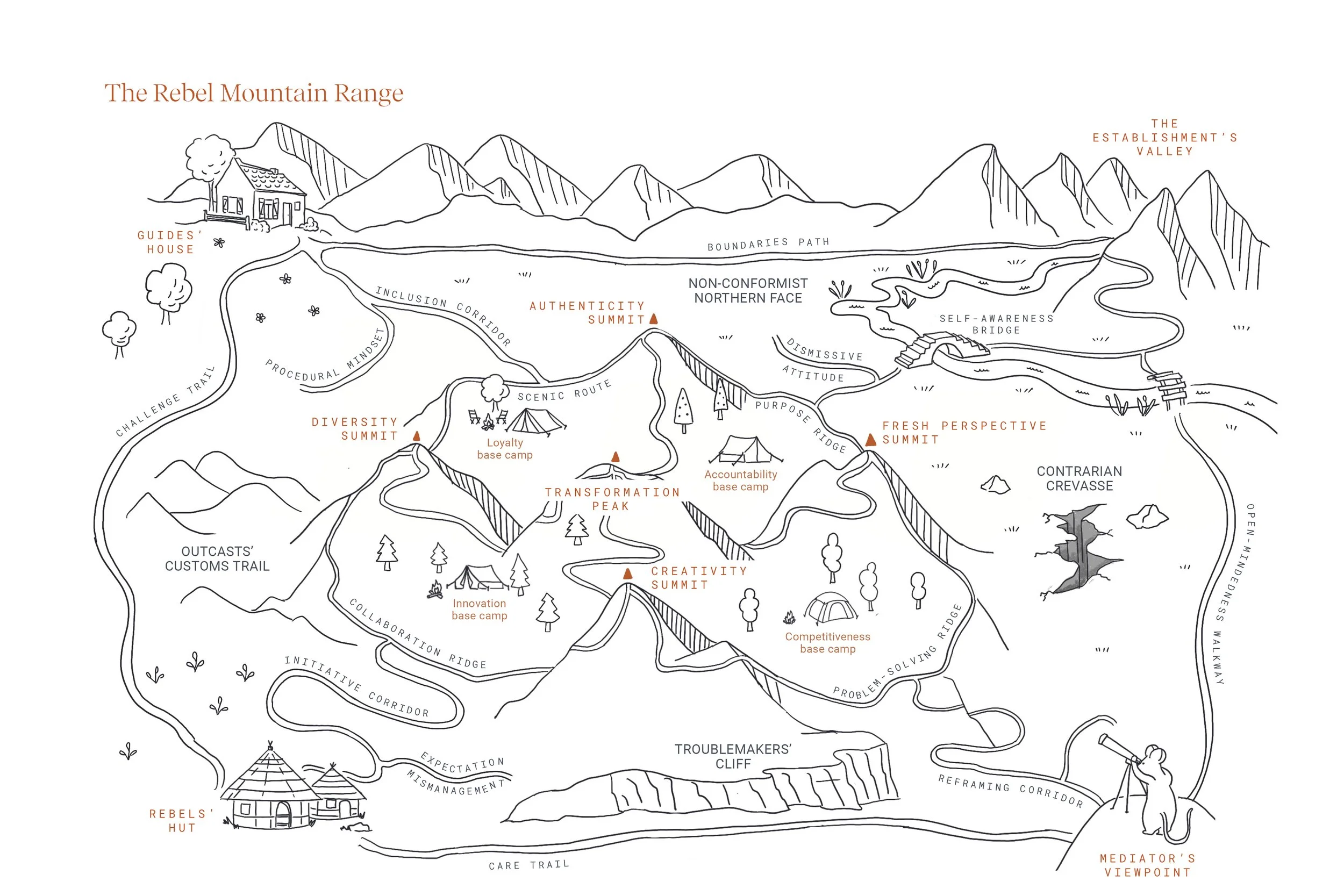
Hiking to the Transformation Peak.
When supportive, literature focused on rebels in the workplace highlights the benefits that alternative perspectives can offer, including driving creativity, diversity, and authenticity. However, challenging the status quo requires more than disruption; it demands being open to change and contradiction. It also requires distinguishing between a genuine rebellious attitude, which involves taking risks, and toxic behaviour, which thrives on instability and disruption.
Taking the scenic rather than the cynic route, we view this classic management challenge as a mountain range: sublime, arduous, scary, and ultimately transformative. Whether you find rebellious energy unsettling or see it as a catalyst for change, here are some pointers to help you navigate the journey without losing your way.
1. It’s relational.
Rebels trigger us. They not only challenge what we do, but who we are as leaders. Or at least, that’s how it feels. While the classic advice to “separate the person from the problem” might help in this situation, it’s not enough to unlock the transformative potential of effectively managing rebellion.
All organisations strive to be competitive and innovative and to foster loyalty and accountability. Rebels invites us to rethink what these values truly mean, pushing the organisation to evolve its practices and culture in meaningful ways.
2. You have options on how to respond.
Both the establishment and its challengers have choices in how they navigate their relationship. The establishment can anchor its response in the organisation’s sense of purpose, while challengers can direct their rebellious energy into proactive, collaborative initiatives. Alternatively, an institutional approach might question the rules or set boundaries, whereas a relational approach would emphasise open-mindedness and genuine care.
With choices come responsibilities. The first is to resist the urge to react impulsively when triggered. The second requires both challengers and the establishment to acknowledge the mirrored perceptions that fuel discomfort in their relationship.
3. Your choices affect other people.
Because rebels challenge the status quo, their actions and how others respond affect the entire ecosystem. But those not directly challenged don’t have to remain bystanders. Those with stewardship over norms, rules, and governance can act as guides for both the establishment and those perceived as rebels. They can help establish boundaries to create a safe space for constructive challenge and inclusive dialogue.
When rules seem inaccessible or unstable, mediators can step in to help reframe conflicting viewpoints, shifting the discussion to what truly matters for the organisation as a whole.
Both processes can unfold simultaneously, driven by stakeholders who feel secure enough to navigate the ebb and flow of rebellious relationships. There’s no need to pull the rug out from under those who rely on the stability that the establishment is meant to provide.
4. There is no easy way out… enjoy the hike!
Because it rocks the boat, rebellious energy can be a powerful source of learning and growth, especially for those willing to reflect on their own approach. Institutionally minded individuals should resist the urge to dismiss it or rely too heavily on the procedure, while establishments should avoid dismissive attitudes towards dissent. Otherwise, the organisation risks missing out on the innovation and loyalty that come from true inclusion.
For those who embrace rebellious energies, managing expectations is key to avoiding frustration, fostering collaboration, and sustaining momentum. Timing also matters, as knowing when and how to challenge prevents being labelled as merely a contrarian.
© Baptiste Raymond - tembocitizen.com